



Patio Power Washing by Surface Type: Methods & Real Pricing
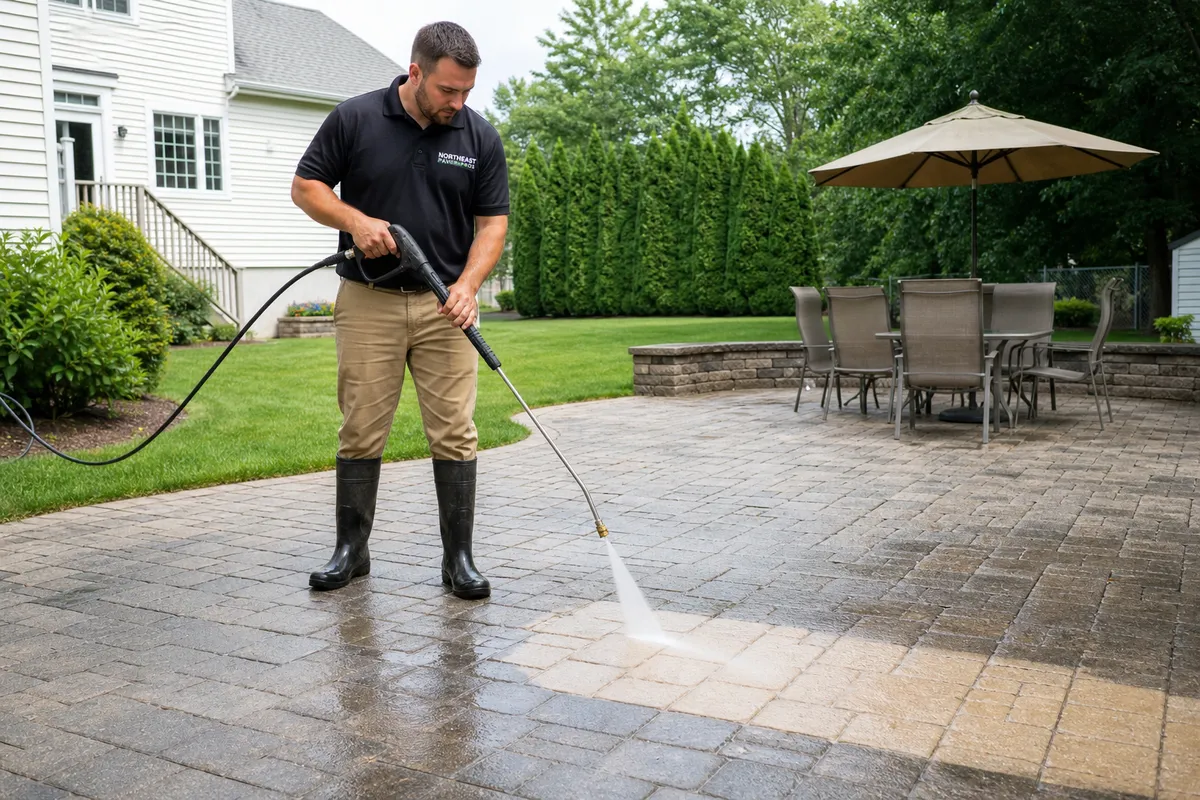
A clean patio is the difference between a backyard you show off and one you apologize for. But here's what most homeowners learn the hard way: the same pressure washer that makes concrete look brand new can gouge soft bluestone, blast the sand out of paver joints, or leave permanent fuzz on wood. Patio power washing is not one job—it's a handful of different jobs that happen to share a machine. This guide walks through the right method for every common patio surface, when to dial the pressure down, and exactly what professional cleaning costs at Property Refresh.
Key Takeaways
The correct pressure for a patio depends entirely on the material: roughly 2,500–3,000 PSI for poured concrete, 1,500–2,200 PSI for pavers and brick, and 600–1,200 PSI (or soft washing) for bluestone, natural stone, wood, and composite.
Paver and brick patios need their joint sand replaced after cleaning, and white residue called efflorescence often needs a dedicated cleaner rather than brute force.
Delicate surfaces such as flagstone, wood, and composite are usually cleaned with a low-pressure "soft wash" that relies on detergent and dwell time instead of raw force.
Professional patio power washing at Property Refresh starts at $180 for 100–299 sq ft and is priced per job by square footage, not by the hour.
Most Chicagoland patios benefit from a full clean once a year—ideally in late spring or early summer—with light rinsing in between.
Why Your Patio's Surface Type Changes Everything
Power washing works by driving water at high pressure to break the bond between grime and a surface. That force is measured in PSI (pounds per square inch) and paired with a nozzle angle and a working distance. Get those three variables right and dirt, algae, and mildew lift away cleanly. Get them wrong and you etch concrete, splinter wood, or drive water into places it shouldn't go. If you want a fuller primer on how the equipment works before you start, our complete beginner's guide to power washing breaks down PSI, GPM, and nozzle color codes.
The reason patios are tricky is that "patio" describes at least five very different materials. A stamped concrete slab shrugs off pressure that would destroy a wood deck. A natural stone terrace that looks rock-solid can chip and flake under a narrow tip. Below, we go surface by surface so you know what your patio actually needs. For a broader look at the technique itself, the overview of pressure washing on Wikipedia is a solid neutral reference.
Concrete Patios
Poured and stamped concrete is the toughest patio surface you'll deal with, which makes it the most forgiving for power washing. It handles high pressure well, so it's the ideal place for a beginner to build confidence.
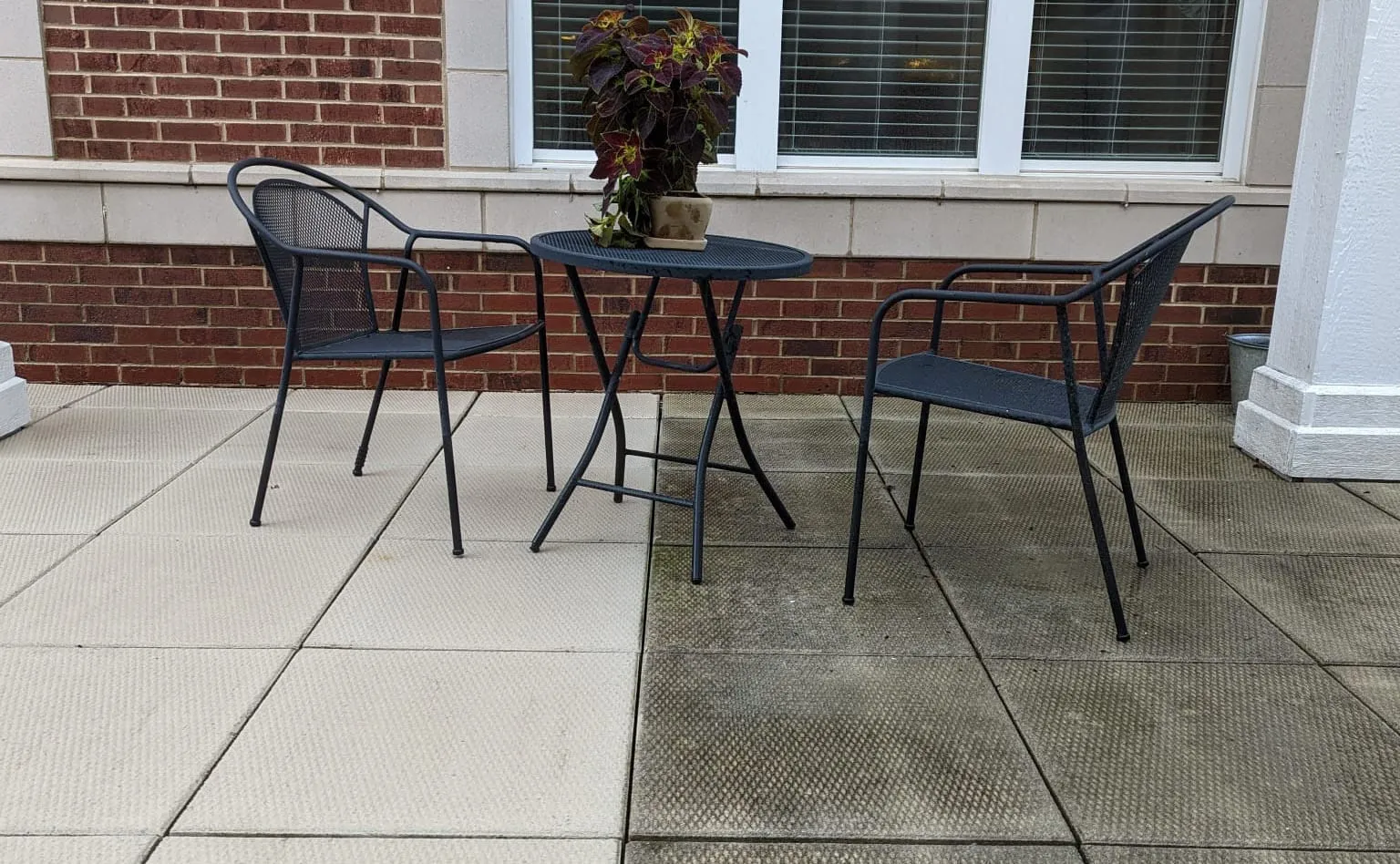
Pressure: 2,500–3,000 PSI is safe for most exposed concrete.
Nozzle: A 25° (green) tip for general cleaning, or a 15° (yellow) tip for stubborn stains—kept moving at all times.
Best tool: A flat surface cleaner attachment. It spins two nozzles under a shroud, cleans far faster than a wand, and—critically—prevents the zebra striping you get from uneven wand passes.
Watch out for: Oil and rust stains, which need a degreaser or oxalic-acid cleaner to pull out of the porous surface; pressure alone rarely removes them.
Stamped or colored concrete with a decorative sealer should be treated a step gentler—drop to around 2,000 PSI and a wider tip so you don't strip the finish. For more field-tested tips on concrete and other hard surfaces, see the advice in top power washing tips shared by Chicago professionals.
Paver Patios
Interlocking concrete pavers are one of the most popular patio surfaces in Chicagoland, and they clean up beautifully—with one important catch. The sand packed between each paver ("joint sand") is easy to blast out with too much pressure, which leaves joints hollow and lets pavers shift and wobble over time.
Pressure: Keep it in the 1,500–2,200 PSI range and use a 25°–40° tip.
Technique: Hold the wand at a shallow angle and stay 8–12 inches from the surface. Never drive the stream straight down into a joint.
After cleaning: Sweep new polymeric joint sand into the seams once the pavers dry, then mist it to lock everything back in place. Skipping this step is the most common paver-patio mistake.
White haze? A chalky film called efflorescence—mineral salts rising to the surface—is common on pavers and won't scrub off with water. Efflorescence needs a dedicated remover, not more pressure.
Clay Brick Patios
Classic clay brick—whether laid in a herringbone pattern or a simple running bond—is more porous than concrete pavers and often set in older, softer mortar. It cleans up gorgeously but rewards a lighter touch.
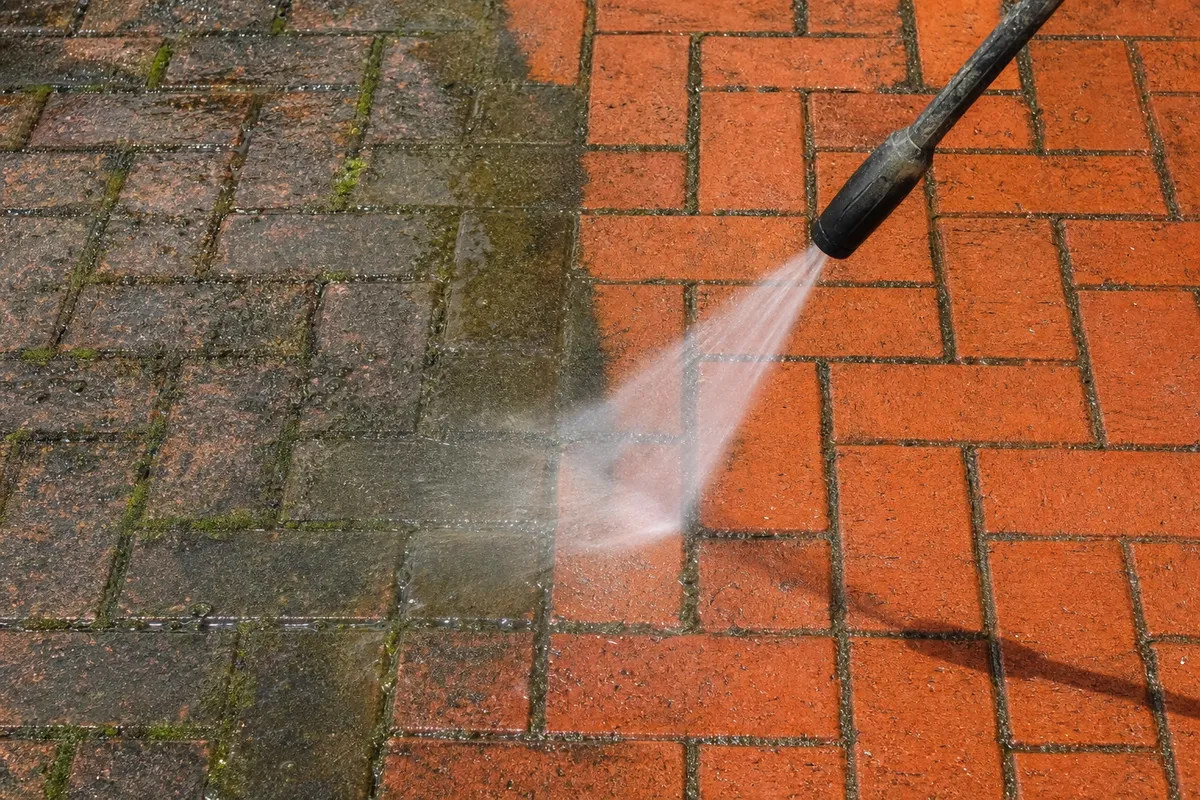
Pressure: 1,500–2,000 PSI with a 25° tip is plenty for most brick.
Mortar check: Test a small area first. If pointing is crumbling, high pressure will wash it out—repair the mortar before you clean, or switch to a soft wash.
Moss and algae: Brick's texture traps organic growth. A sodium-hypochlorite cleaner applied first, given time to dwell, then rinsed at low pressure removes far more than pressure alone—and keeps it from coming back as quickly.
Bluestone, Flagstone & Natural Stone
Natural stone patios—bluestone, flagstone, slate, limestone, travertine—are premium surfaces that demand the most caution. Their layered, sometimes flaky structure means a narrow high-pressure tip can chip, pit, or delaminate the stone permanently.
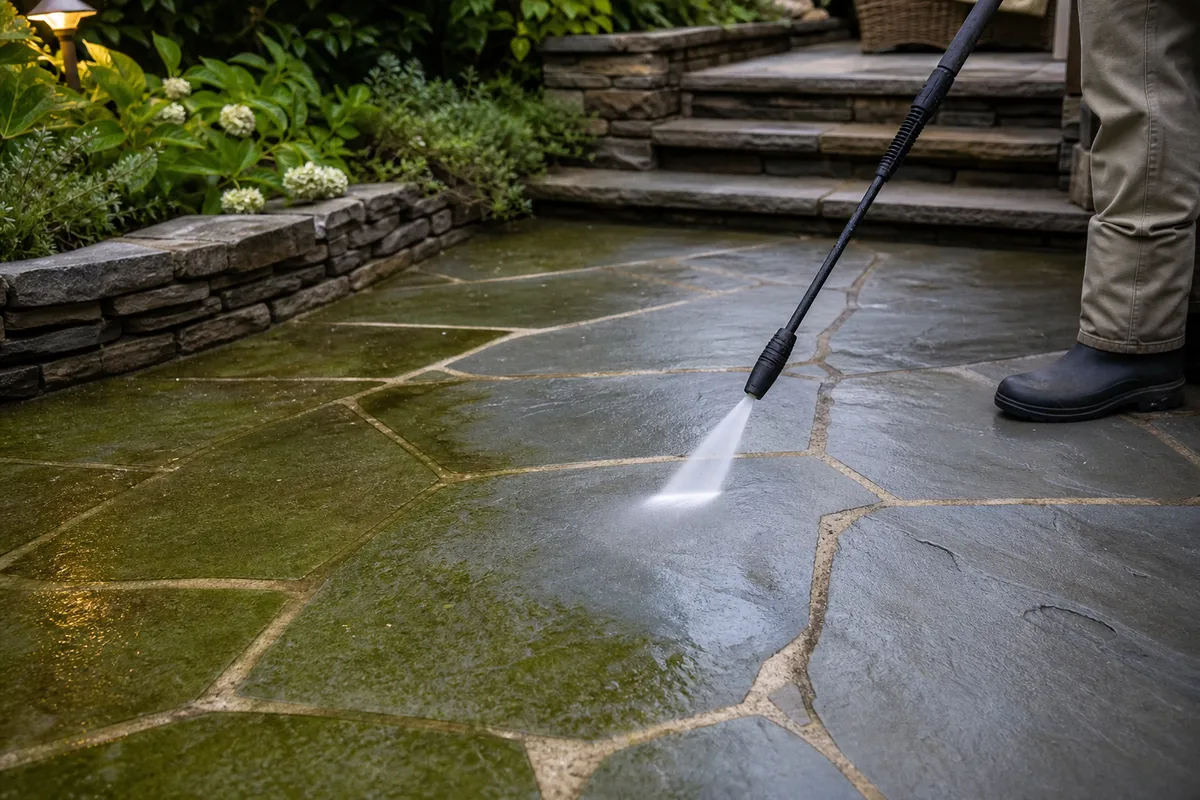
Pressure: Stay at 600–1,200 PSI with a wide 40° tip, or use a soft wash for anything delicate or aged.
Method: Apply a stone-safe (pH-neutral) cleaner, let it sit, then rinse gently. The chemistry does the work, not the force.
Sanded joints: Like pavers, flagstone with sand-filled joints will need re-sanding afterward.
When in doubt: Natural stone is expensive to replace. If you're unsure about your patio's condition, this is a strong candidate for professional cleaning.
Composite & Wood Patios
Ground-level wood and composite "patios" (essentially low decks) are the softest surfaces of all, and the ones people damage most often. Too much pressure raises fuzzy wood fibers, carves lines into the boards, or scars composite so it never looks right again.
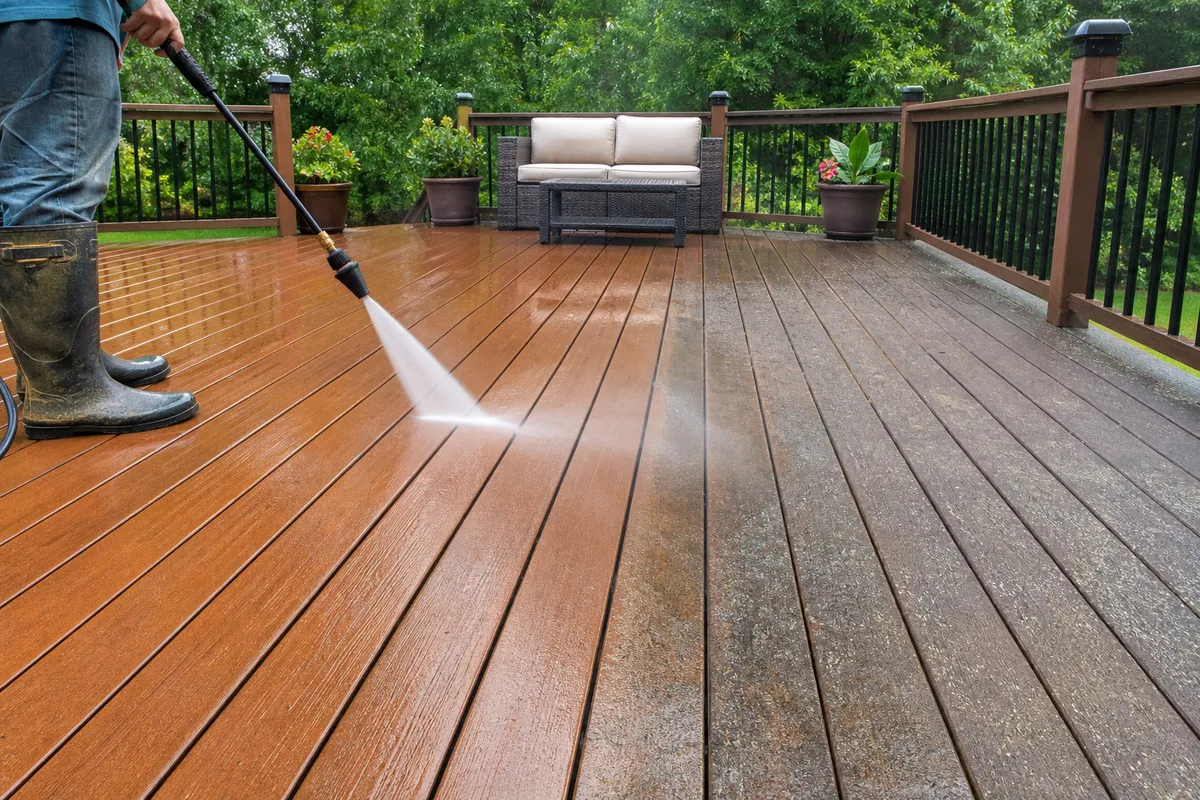
Wood: 600–1,200 PSI, a 40° tip, and always spray with the grain—never across it.
Composite: Follow the manufacturer's guidance; many cap-stock composites should only be soft washed with a cleaner and a soft brush to protect the warranty.
Distance: Keep the wand 12 inches or more away and keep it moving. Let detergent, not pressure, lift the grime.
Because the technique for wood overlaps heavily with deck care, our dedicated walkthrough on how to power wash a deck covers stripping, brightening, and resealing in far more detail.
Pressure Washing vs. Soft Washing: Knowing When to Ease Off
You'll notice a pattern above: the more delicate the surface, the more we lean on soft washing instead of high pressure. Soft washing uses a low-pressure application of cleaning solution—typically a diluted detergent or biocide—that's left to dwell and then rinsed away. It kills the algae, mold, and mildew at the root rather than just blasting the top layer off.
As a rule of thumb: use high pressure on concrete, moderate pressure on pavers and brick, and soft washing on stone, wood, composite, and anything you're not sure about. When a surface is fragile, valuable, or hiding possible damage underneath, easing off the trigger is almost always the smarter call.
How Much Does Patio Power Washing Cost?
At Property Refresh, patio and deck power washing is priced per job by square footage—not by the hour—so you know the number before we start. Here is our current pricing for decks, patios, and similar horizontal surfaces:
| Square Footage | 100 to 299 | 300 to 499 | 500 to 699 | 700 and up |
|---|---|---|---|---|
| No Railing | $180 | $280 | $350 | $400 |
| Add Railing | $50 | $80 | $100 | $120 |
So a typical 300–499 sq ft paver patio with no railing runs $280, while a larger 700+ sq ft deck with railing lands around $520 ($400 + $120). Heavy algae or mildew treatment and joint re-sanding may be quoted separately depending on the surface. For the full breakdown alongside our house and driveway rates, see our power washing service page, and browse real results on our project gallery.
Property Refresh has served Chicagoland—Cook, DuPage, Lake, Will, McHenry, and Kane counties—since 2008. Every quote is free, and you can reach us anytime at (224) 386-4836.
DIY vs. Hiring a Pro
A durable concrete patio is a very reasonable DIY project if you own or rent the right machine and respect the technique. Where homeowners get into trouble is on the surfaces that punish mistakes: natural stone, aged brick with soft mortar, wood, and composite. On those, a single wrong pass can cause damage that costs far more than the cleaning would have.
Hiring a professional also gets you commercial-grade equipment, the right detergents and dwell times, and insurance if something goes wrong. If you're weighing the trade-offs, our honest take on whether DIY power washing is a good idea lays out the real risks and savings on both sides.
How Often Should You Power Wash Your Patio?
For most Chicagoland homes, a full patio cleaning once a year keeps things looking sharp and prevents slippery algae buildup. Late spring or early summer is ideal—after pollen season settles but in time to enjoy the patio all season. Shaded patios and north-facing surfaces that stay damp may need a light rinse or spot treatment mid-season to stay ahead of green growth. Regular cleaning also protects your investment: left unchecked, organic growth and trapped moisture shorten the life of pavers, wood, and stone alike.
Frequently Asked Questions
1. What PSI is safe for a patio?
It depends on the material. Poured concrete handles 2,500–3,000 PSI, pavers and clay brick do best at 1,500–2,200 PSI, and delicate surfaces like bluestone, flagstone, wood, and composite should stay at 600–1,200 PSI or be soft washed. Always test a hidden spot first and keep the nozzle moving.
2. Will power washing ruin my paver patio?
Not if it's done correctly. The main risk is blasting the joint sand out from between the pavers, which lets them shift. Use moderate pressure, hold the wand at a shallow angle, and replace the joint sand with fresh polymeric sand after cleaning to keep everything locked in place.
3. What is soft washing, and when should I use it?
Soft washing applies a low-pressure cleaning solution that's left to dwell and then rinsed off, killing algae and mildew at the root instead of blasting them away. It's the safest method for natural stone, wood, composite, aged brick, and any surface you're worried about damaging with high pressure.
4. How much does professional patio power washing cost?
At Property Refresh, patio and deck cleaning is priced per job by square footage: $180 for 100–299 sq ft, $280 for 300–499, $350 for 500–699, and $400 for 700+ sq ft with no railing. Add $50–$120 for railings depending on size. Every estimate is free—call (224) 386-4836.
5. How often should a patio be power washed?
Once a year is right for most patios, ideally in late spring or early summer. Shaded, damp, or north-facing patios that grow algae faster may benefit from a light mid-season rinse or spot treatment to stay slip-free and clean.
6. What's the white residue on my brick or paver patio?
That chalky white film is efflorescence—natural mineral salts that migrate to the surface as moisture evaporates. It won't wash away with water pressure alone. A dedicated efflorescence remover applied after cleaning dissolves the salts and restores the true color of the brick or pavers.
A great-looking patio comes down to matching the method to the material: high pressure where the surface can take it, a gentle soft wash where it can't, and fresh joint sand wherever it belongs. Do that, and your patio will look years younger by the weekend.
Not sure which approach your patio needs—or would rather leave the fragile stone and wood to a pro? Contact Property Refresh for a free quote, and we'll bring the right equipment and technique for your exact surface.