



Winter Gutter Cleaning Tips for Homeowners: How to Prepare and Protect Your Gutters Safely
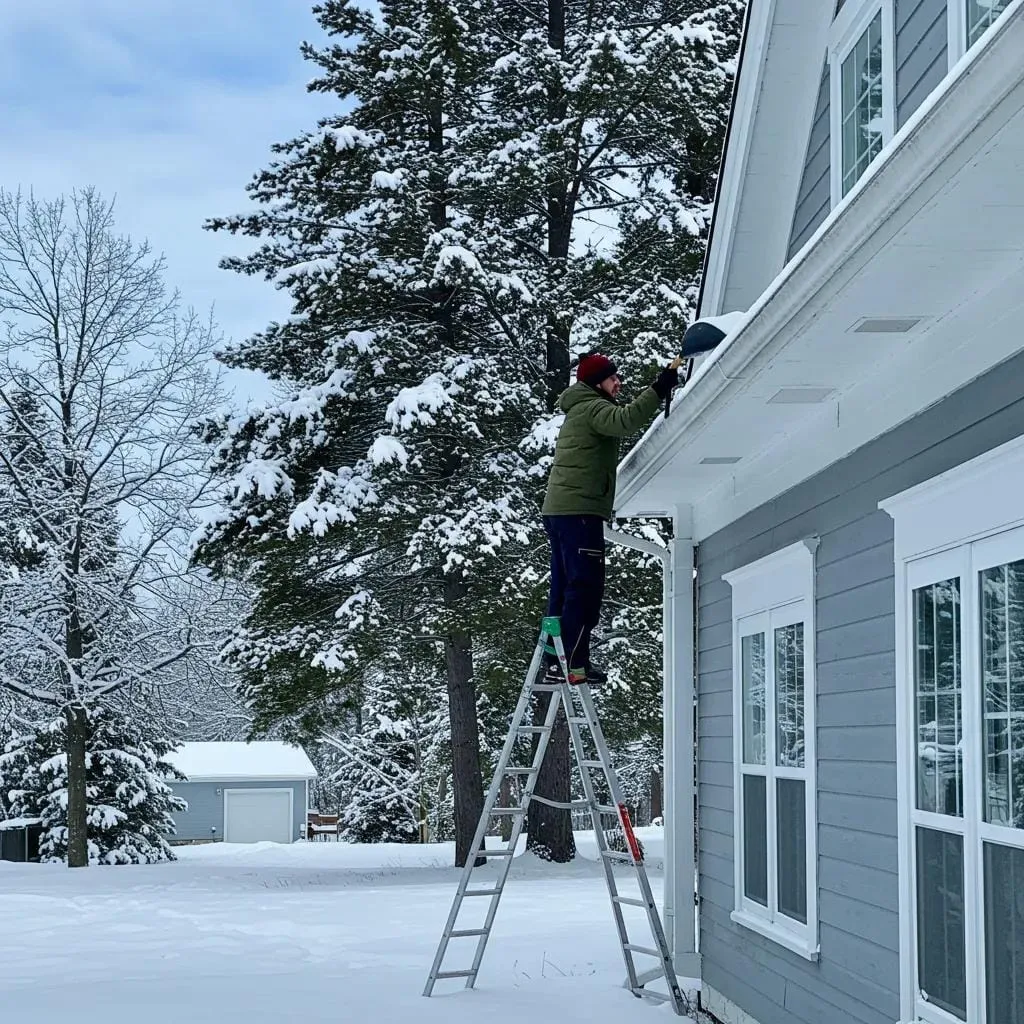
Winter gutter cleaning is the practice of clearing and preparing roof gutters and downspouts ahead of and during cold weather to prevent ice dams, frozen downspouts, and winter water damage. This article explains why winter gutter cleaning matters, how ice dams form, safe DIY approaches, and clear decision points for hiring pros so homeowners can reduce roof, attic, and foundation risk. You will learn a safety-first toolkit, a concise how-to checklist for pre-winter preparation, and practical protection options like gutter guards and heated cables that match different roof and tree conditions. Understanding the importance of gutter cleaning during winter helps protect your home from costly water issues and maintain its overall structural integrity.
'
The guidance emphasizes actions that reduce freeze-thaw problems and long-term moisture intrusion, while also noting when professional inspection, repair, or guard installation makes sense. Read on for step-by-step tasks, safety lists, comparison tables, and short risk-priority guidance so you can protect your home before snow and freezing rain arrive.
Why Is Winter Gutter Cleaning Essential for Homeowners?
Winter gutter cleaning removes debris and ensures drainage paths remain open so melting snow and ice can leave the roof rather than refreeze at eaves and form ice dams. When gutters are blocked, water pools at the roof edge, refreezes, and forces water under shingles, which causes leaks, rot, and interior damage; keeping gutters clear prevents that mechanism and protects insulation and structural elements. Regular winter preparedness reduces the chance of foundation and basement issues by directing meltwater away from the house, and it lowers pest and mold risk by removing organic material that holds moisture. The next paragraphs list the top winter risks and explain how they connect to blocked gutters.
This list highlights the primary winter risks gutters prevent:
- Ice dams can form at eaves and force meltwater under shingles, causing roof and attic leaks.
- Foundation and soil erosion result when diverted water saturates grade near footings and basement walls.
- Gutter failure and downstream water damage occur when debris and ice overload hangers and seams.
Understanding these risks clarifies why a proactive cleaning and inspection routine reduces both immediate and long-term repair costs, and it leads naturally into the mechanics of ice-dam formation discussed next.
How Do Ice Dams Form and Why Should You Prevent Them?
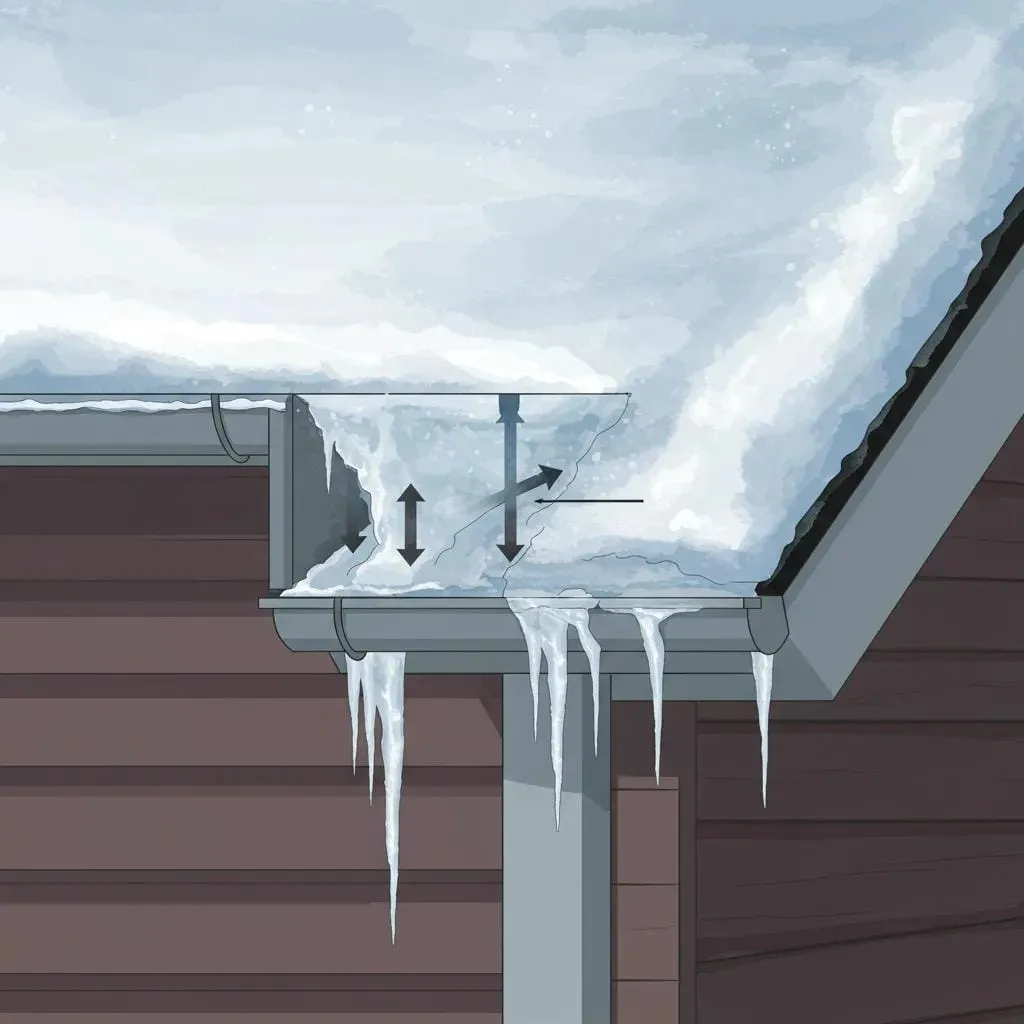
Ice dams form when heat loss from the attic melts snow on the upper roof, permitting water to run down to colder eaves where it refreezes into a ridge that blocks subsequent runoff. This freeze'melt'refreeze cycle channels water behind the dam and under shingles, increasing the chance of interior leaks and ceiling stains that require costly repairs. Preventing ice dams involves both improving roof thermal performance and ensuring gutters and downspouts are clear so meltwater can exit the roof edge rather than pool. Addressing ice-dam risk also ties into choices about insulation and ventilation, which reduce roof surface temperature differentials and therefore reduce the driving cause of dam formation.
The formation of ice dams is a complex process influenced by heat loss and thermal dynamics within a building's structure. Ice dams can cause significant damage if not addressed promptly.
Preventing Ice Dams on Pitched Roofs: Thermal Balance and Building Insulation
The article presents the methodology of thermal balance equation generation for cold attics. This methodology is aimed to provide the scientific basis for engineer activities to prevent the ice hillock building-up on roofs during the periods of the lowest temperature of outside air. The complex of actions that leads to reduction of damages from buildings of thermal energy is listed, heating up to improvement of parameters of a microclimate in the operated rooms of the top floors of buildings. For realization of these actions any materials and technologies providing the necessary level of thermal isolation for the concrete building and satisfying to the fire-prevention and sanitary and hygienic requirements existing in the territory of the Russian Federation are used
What Are the Risks of Clogged Gutters Causing Winter Water Damage?
Clogged gutters concentrate winter meltwater where it can refreeze against roofing materials, leading to attic and ceiling leaks, rot in fascia boards, and damaged gutter fastenings that sag or separate. Downstream, concentrated discharge near foundations accelerates soil erosion and can increase basement infiltration or hydrostatic pressure against foundation walls during freeze'thaw cycles. For homeowners in the area, checking local gutter cleaning services in Chicago before heavy snowfall helps prevent these issues and keeps drainage systems working properly through the season. Interior moisture problems foster mold growth that affects air quality and increases remediation costs, while exterior damage compromises curb appeal and roof longevity. Recognizing these cascading risks helps prioritize inspection items and informs the repair or professional help decisions covered later.
How Can Homeowners Safely Clean Gutters During Winter?
Homeowners can perform some winter gutter tasks safely when conditions are stable, surfaces are ice-free, and proper safety gear is used, but winter introduces slip and cold-related hazards that change the risk calculus. Safe DIY work focuses on ground-level inspection, removing easily accessible debris, and using a stabilized ladder with a helper; avoid climbing an icy roof or working during active freezing precipitation. When conditions are hazardous'multi-story homes, heavy ice, or compromised roof access'professional gutter cleaning are the safer choice because they combine inspection, repair, and mitigation options that reduce repeated exposure. The next section outlines essential tools and safety checks for responsible homeowner action.
This equipment and practice list covers essential winter adjustments for safe gutter work:
- Ladder with stabilizer and non-slip footwear to reduce fall risk and improve footing.
- Heavy insulated gloves, eye protection, and a scoop or small trowel for debris removal.
- A buddy system and weather check to avoid working during freezing rain or high winds.
Following these safety items reduces accident risk while preparing you to gutter cleaning.
What Tools and Safety Tips Are Needed for Winter Gutter Cleaning?
Essential winter tools include a ladder with stabilizer, non-slip boots, insulated gloves, a handheld scoop, and a bucket to collect debris so you avoid carrying loose material while climbing. Use a ladder leveler on uneven ground, test rungs before trusting them, and keep a charged phone and a partner nearby so someone can assist if conditions change; this reduces the chance of fall-related injury in cold weather. For power tools, use GFCI-protected cords and keep tools dry to avoid electrical hazards; avoid using pressure washers on frozen surfaces that can create more ice. These precautions naturally lead into the criteria for when a job exceeds safe DIY limits.
When Should You Hire Professional Gutter Cleaning Services in Winter?
Hire a professional when your roof is multi-story, ice or compacted snow prevents safe ladder placement, or you have mobility, health, or age factors that increase fall risk. Professionals can perform combined cleaning, inspection, and repair in one visit and they can install preventative measures like gutter guards and downspout caps to reduce repeat visits; this comprehensive approach minimizes recurring winter exposure. Property Refresh offers professional gutter cleaning, inspection, repair, and installation of gutter guards and downspout caps as a safe alternative when DIY is unsafe, emphasizing damage prevention, professional expertise, and transparent pricing based on house size and story count. Choosing a pro is particularly wise when initial inspection finds sagging hangers, open seams, or existing leaks that could worsen under freeze'thaw conditions.
What Is the Best Checklist to Prepare Gutters for Winter?
Preparing gutters for winter means following an ordered set of inspection, debris removal, repair, and test steps so meltwater flows off the roof and away from the foundation. Start with a ground-level inspection, clear visible debris, secure hangers, and test downspout flow; if flow remains restricted, plan for deeper clearing or professional service. For homeowners who maintain their gutters year-round, reviewing a few seasonal gutter maintenance tips can help extend system life and reduce buildup before winter begins. The checklist below presents a clear, step-by-step guide homeowners can follow before the first heavy freeze to minimize ice-dam formation and water intrusion risk. After the checklist, a comparison table shows task frequency, required tools, and safety level to help you plan and prioritize work effectively.
Follow this numbered pre-winter checklist to prepare gutters effectively:
- Inspect gutters and fascia from the ground for sagging, debris, and visible damage.
- Remove loose debris by hand or scoop, then flush downspouts to confirm clear flow.
- Secure loose hangers, seal visible leaks with temporary caulk, and trim nearby branches.
Completing these steps before freeze cycles reduces emergency repairs and makes it easier to schedule any necessary professional follow-up.
Intro to maintenance table: This table helps prioritize pre-winter tasks by frequency, tools required, and safety level so homeowners can plan work and know which tasks may need professional help.
| Task | Frequency | Tools Needed | Safety Level |
|---|---|---|---|
| Debris removal and flushing | Annually (pre-winter) | Ladder, scoop, hose | Moderate (ladder use) |
| Hanger and seam check | Annually | Screwdriver, sealant | Moderate (roof edge access) |
| Downspout clearing and testing | Annually or as needed | Plumber snake, hose | Low (ground-level possible) |
This table clarifies which tasks are routine and which carry higher safety risk, guiding homeowners to act or to seek professional service as needed.
How Do You Inspect and Remove Debris from Gutters and Downspouts?
Begin with a visual inspection from the ground to note heavy debris, sagging sections, and downspout discharge points; this reduces unnecessary ladder work and targets problem areas. Use a stabilized ladder and scoop debris into a bucket, removing wet debris that holds heat and freezes rapidly, then flush the gutter and downspout with water to check flow and identify hidden clogs. If water backs up, use a plumber's snake from the bottom of the downspout or detach the elbow for manual clearing, and always check for leaks after flushing. These steps prepare gutters for winter and indicate whether repairs or professional attention are needed next.
How Do You Check for Damage and Secure Gutters Before Winter?
Inspect hanger spacing and fastener tightness, look for split seams or open end caps, and press gently on gutters to confirm they remain firmly attached to fascia rather than sagging under weight. Temporary fixes include resecuring hangers with longer screws, applying sealant to small leaks, and adding downspout extenders to move discharge away from the foundation; larger structural repairs should be scheduled with a professional. Document damaged areas during inspection so you can prioritize repairs that prevent ice-related failures, and remember that repeated freezing cycles magnify small issues into major repairs. Diagnosing and addressing these problems reduces the chance of emergency winter failures and links directly to prevention options covered below.
What Are Effective Gutter Protection Options for Winter Maintenance?
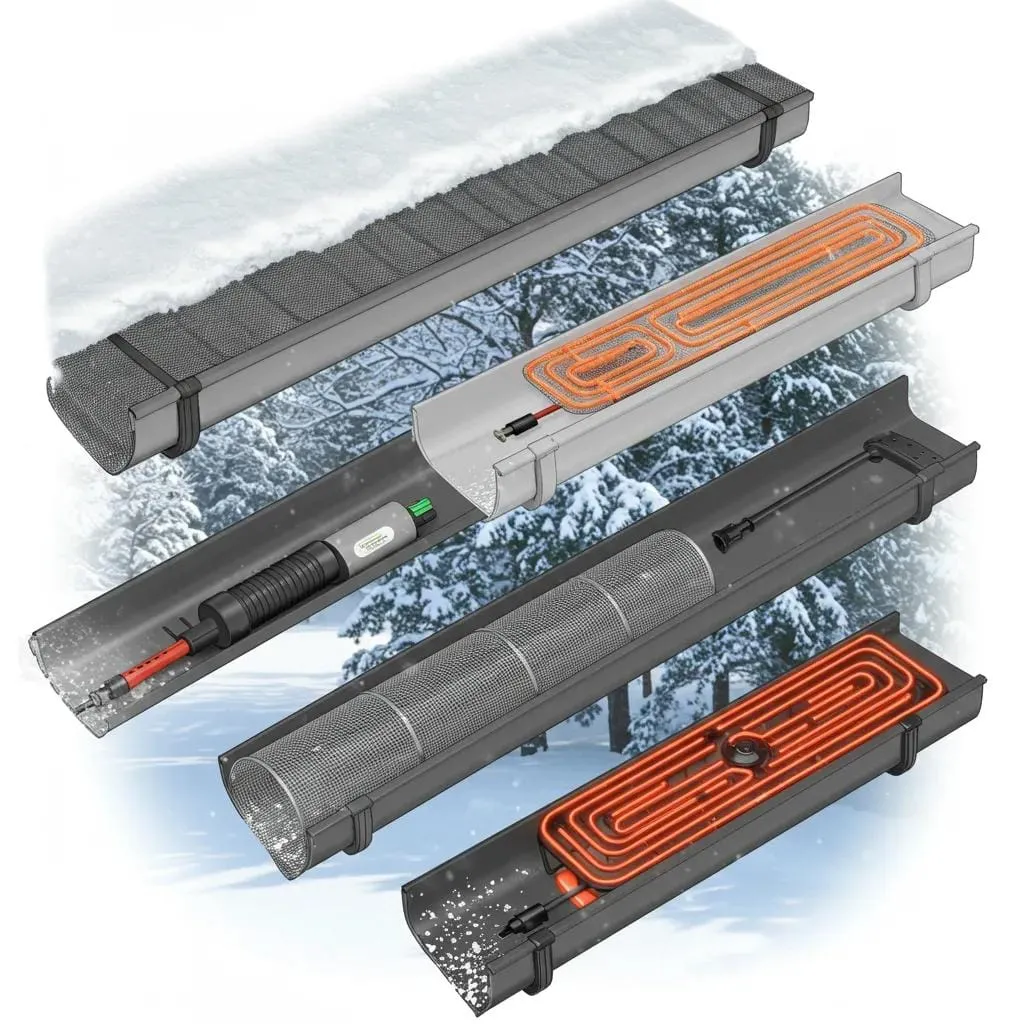
Several gutter protection strategies help minimize winter clogs and ice buildup, including mesh or micro-mesh guards that keep debris out, reverse-curve systems that shed debris while allowing water entry, and heated gutter cables that melt ice in vulnerable eaves and downspouts. Each approach has trade-offs in cost, maintenance, and effectiveness depending on roof pitch, tree cover, and local weather patterns; pairing guards with heated cables can address both debris and ice in high-risk homes. Landscape management, especially trimming overhanging branches before winter, significantly reduces the debris load and prolongs the effectiveness of installed guards. For broader upkeep, professional exterior cleaning experts can ensure these systems remain clear and functional year-round.
'
The next table compares common protection options, their pros and cons, cost range, and the situations where they perform best.
Intro to protection options table: This comparison summarizes winter performance and recommended use cases so homeowners can match protection choices to and tree conditions.
| Protection Option | Pros / Cons | Cost Range | Best For |
|---|---|---|---|
| Mesh / micro-mesh guards | Pros: blocks small debris; Cons: may need cleaning under heavy pine needle load | Moderate | Homes with light to moderate tree cover |
| Reverse-curve guards | Pros: sheds large debris; Cons: can trap fine debris and require maintenance | Moderate to High | Steep roofs with broad-leaf trees |
| Heated gutter cables | Pros: melts ice at eaves and downspouts; Cons: energy use and installation | Moderate to High | Homes prone to ice dams and heavy snow |
This table demonstrates that combining approaches'guarding against debris while using targeted heating'often yields the best winter protection for vulnerable roofs.
How Do Gutter Guards and Heated Cables Prevent Winter Clogs and Ice?
Gutter guards block leaves and large debris from entering the trough so meltwater reaches downspouts unimpeded, while micro-mesh types prevent fine particles that accelerate clogging; both reduce organic buildup that holds moisture and freezes. Heated gutter cables are installed along the eave and inside downspouts to melt accumulating ice and maintain flow during freeze cycles, breaking the freeze'melt loop that forms ice dams. Both solutions reduce manual clearing frequency and lower ice-load stress on hangers, but they require correct selection and installation to match roof geometry and tree exposure. Choosing the right combination reduces winter maintenance and links back to repair and installation services if DIY is impractical.
The operational safety and efficiency of water management systems can be significantly impacted by ice dams, particularly in large-scale projects.
Risk Assessment and Prevention of Ice Dams in Water Diversion Projects
Ice dams are among the important risks affecting the operational safety and water conveyance efficiency of water diversion projects in northern China. However, no evaluation indicator system for ice dam risk assessment of water diversion projects has been proposed. Therefore, in this paper, based on the formation mechanism of ice dams, the risk assessment indicator system and the possibility calculation model of ice dams were both proposed for water diversion projects based on the fuzzy fault tree analysis method. The ice dam risk fault tree constructed in this study mainly includes three aspects: ice production, ice transport, and ice submergence conditions. Eighteen basic risk indicators were identified, and 72 minimum cut sets were obtained by using the mountain climb method. Eight risk indicators were determined as the key risk indicators for ice dams, including meteorological conditions, narrowed cross section, sluice incident, erroneous scheduling judgment, ice cover influence, flat bed slope, control structures, and ice flow resistance of piers. Then, the canal from the Fenzhuanghe sluice to the Beijumahe sluice of the Middle Route of the South-to-North Water Diversion Project was taken as the research object. Combined with the expert scoring method, the ice dam risk probability of the canal was determined to be 0.2029?'?10-2, which was defined as a level III risk, which is an occasionally occurring risk. The study results can support ice dam risk prevention and canal system operation in winter for water diversion projects.
Why Is Trimming Overhanging Branches Important for Winter Gutter Care?
Trimming branches before leaf drop and winter storms minimizes repeated debris delivery onto the roof, which lowers clog frequency and reduces the likelihood of compacted, wet material that freezes into ice. Removing dead limbs also reduces the chance that heavy snow or ice will break branches onto the roof, protecting shingles and gutters from impact damage. Timing pruning in late fall or early winter gives tree crews time to complete work before freeze cycles begin, and hiring certified arborists is recommended for large, high branches to avoid injury. Reducing the debris load through pruning supports the long-term effectiveness of guards and heating strategies discussed earlier, completing the preventive cycle.
Property Refresh provides professional gutter cleaning, inspection, repair, and installation solutions'such as gutter guard and downspout cap installation'to help homeowners who prefer a comprehensive, expert-managed approach to winter protection. Their services emphasize preventing water damage and ice dams through combined cleaning, inspection, and mitigation, with transparent pricing calibrated to house size and story count. For homeowners weighing DIY limits against the risks of winter work, a professional inspection can identify hidden issues and recommend the optimal combination of guards, cables, and repairs to keep a home safe through the cold season. To schedule an inspection or request a quote, you can contact us directly for personalized assistance.
Frequently Asked Questions
1. What are the signs that my gutters need cleaning before winter?
Homeowners should look for several signs indicating that gutters need cleaning before winter. These include visible debris accumulation, sagging sections, or water pooling around the foundation after rain. Additionally, if you notice ice forming on the roof edges or in the gutters, it may indicate blockages that could lead to ice dams. Regular inspections, especially after heavy storms or falling leaves, can help identify these issues early, ensuring that gutters function properly during winter months.
2. How can I prevent ice dams from forming in my gutters?
Preventing ice dams involves a combination of proper insulation, ventilation, and regular gutter maintenance. Ensure that your attic is well-insulated to minimize heat loss, which can melt snow on the roof. Additionally, keep gutters clear of debris to allow meltwater to flow freely. Installing heated cables along the eaves can also help melt any ice that begins to form. Regularly checking for and addressing any blockages or leaks in your gutters will further reduce the risk of ice dams.
3. What should I do if I find leaks in my gutters during winter?
If you discover leaks in your gutters during winter, it's essential to address them promptly to prevent further damage. First, try to identify the source of the leak, which may be due to loose seams or damaged sections. Temporary fixes can include applying waterproof tape or sealant until a more permanent repair can be made. If the damage is extensive or if you are unsure how to proceed, consider hiring a professional to ensure that repairs are done safely and effectively.
4. Are there specific tools recommended for winter gutter cleaning?
Yes, certain tools are particularly useful for winter gutter cleaning. A sturdy ladder with a stabilizer is essential for safe access. Non-slip footwear and heavy insulated gloves will help protect against cold and prevent slips. A handheld scoop or trowel is useful for removing debris, while a bucket can collect waste to avoid carrying loose material while climbing. Additionally, having a plumber's snake on hand can help clear stubborn clogs in downspouts.
5. How often should I inspect my gutters during winter?
During winter, it's advisable to inspect your gutters at least once a month, especially after significant snowfall or storms. Regular inspections help identify any blockages, ice buildup, or damage that could lead to more severe issues. If you notice any signs of ice dams or water pooling, it's crucial to check your gutters immediately. Early detection can prevent costly repairs and ensure that your gutter system functions effectively throughout the winter season.
6. What are the benefits of hiring a professional for winter gutter maintenance?
Hiring a professional for winter gutter maintenance offers several benefits, including safety, expertise, and efficiency. Professionals are trained to handle the risks associated with winter work, such as icy conditions and high roofs. They can perform thorough inspections, identify hidden issues, and provide repairs or installations, such as gutter guards or heated cables. This comprehensive approach not only saves time but also ensures that your gutters are properly maintained, reducing the risk of winter-related damage to your home.
7. Can gutter guards help reduce winter maintenance needs?
Yes, gutter guards can significantly reduce winter maintenance needs by preventing debris from entering the gutters. They help keep gutters clear, allowing meltwater to flow freely and reducing the likelihood of ice dams forming. However, it's important to choose the right type of guard for your specific roof and tree conditions. While gutter guards minimize the frequency of cleaning, regular inspections are still necessary to ensure they are functioning correctly and to address any potential issues before they escalate.